Ancient environmental studies: interdisciplinary approaches
SGSAH workshop, held on 9 March 2026.
Reflections on the event by David Lepidi.
This three-hour online workshop offered a broad introduction to ancient environmental studies. It focused on the ancient Mediterranean but was intended to be applicable to other premodern periods and cultures. The workshop addressed, in turn, environmental archaeology, paleoenvironmental history (including discussion of approaches to dealing with palaeoscientific data), and ecocritical approaches to ancient literature and culture. The discussion was led by Dr Ruben Post (Paleoenvironmental history), Dr Andrea Brock (Environmental archaeology) and Professor Jason König (Ecocriticism), each of whom gave a presentation in their area of expertise. A handout with key publications (see below for the full bibliography), along with questions to consider in all three areas was provided in advance to guide the discussion.
The workshop was intended to be accessible to students across the arts and humanities disciplines. It was aimed at students in Classics and ancient history looking for some starting points for engaging with the rapidly expanding field of ancient environmental studies, as well as those in other disciplines with environmental humanities interests as an opportunity to explore the question of how the premodern past can give us new resources for addressing contemporary problems. Seventeen people (mostly PGR students) took part in the workshop. Their research approached environmental studies from a wide range of academic backgrounds and disciplines, including Classical Archaeology, Experimental archaeology, Human Osteoarchaeology, Classics, English Literature, Creative Writing, and Gaelic Linguistics. Participants informed and engaged actively in the discussion, often addressing key questions and publications from the perspective of their own disciplines.
The workshop was divided into five sections:
- The first section, led by Dr Ruben Post, provided a succinct introduction to the long history of ancient environmental studies. It examined the relationship between different types of evidence and analytical techniques, considering the role that scientific evidence can – or should – play in historical studies of human-environment interactions.
- The second section was led by Dr Andrea Brock. It began with an overview of the data and methodologies employed in environmental archaeology, followed by a focused case study on alluvial geoarchaeology, which highlighted the importance of environmental archaeology for a more accurate understanding of human-nature interactions in ancient Rome.
- The third section explored the relationship between climate change, infectious diseases, and societal breakdown in the Late Roman Empire. It also invited broader discussion of Kyle Harper’s book (2017) The Fate of Rome: Climate, Disease and the End of an Empire.
- Section four, led by Professor Jason König, surveyed some key developments in ecocriticism from the last few decades, alongside recent attempts to bring these approaches into dialogue with research on Greek and Roman antiquity.
- Finally, the fifth section focused on the range of approaches offered by the environmental humanities for studying and addressing the disproportionate impact of environmental damage on disadvantaged communities. It asked whether engagement with the past can help us confront the unequal effects of climate change and its entanglement with the global history of capitalism and empire, and whether it is possible to write a postcolonial environmental history of the ancient Mediterranean.
The History of Ancient Environmental Studies and Their Foundational Principles
In defining ancient environmental studies, Ruben Post suggested that it comprises a range of scholarly subdisciplines that aim to integrate non-human actors and forces into the study of the ancient world. He identified three foundational principles that unite different approaches to the study of environmental history: first, the recognition that humans and their environments have continuously been influenced and altered by one another in dynamic feedback loops; second, the acknowledgment that human perceptions of the environment have changed significantly over time, and with important implications for human-environment relationships; and third, the recognition that the contemporary relationship between humans and the environment – particularly in the context of global environmental crises – can only be fully understood with reference to the distant past. However, the importance of multidisciplinarity and multicausality in ancient environmental studies has only been widely acknowledged in more recent scholarship (within the twenty-first century). Earlier works tended to favour monocausal explanations, focusing either on the impact of the environment on human societies, or the destructive effects of humanity activity on nature, and relied predominantly on literary sources.
Post’s presentation began by exploring the origins of ancient environmental studies, with particular attention to the concept of environmental determinism from ancient historiography through to the nineteenth- and early twentieth-century scholarship. Environmental determinism – which was a pervasive idea in the ancient world (see, for example, Herodotus’ Histories) – was the belief that physical, cultural and moral characteristics are shaped by the environment. In ancient historiography, this concept informed ideas about imperialism and colonialism, suggesting that environmental conditions made certain populations more suited to subjugations or conquest. These ideas were revived during the Renaissance, when thinkers revisited Graeco-Roman sources, and, eventually, the focus on the natural environment as a key determinant of history became an important explanatory factor in early modern European historiography. In the nineteenth century, environmental determinism became closely associated with debates surrounding the decline of ancient civilizations, with environmental factors often viewed as key drivers of historical collapse. By the twentieth century, historical geographers (see, for example, Ellsworth Huntington) sought to interpret global human history through a strongly deterministic environmental framework.
The presentation then examined the pivotal developments of the “ecological turn” of the 1960s, which contributed to the emergence of environmental history as a distinct discipline. In the aftermath of the Second World War, responses to colonialism and imperialism, alongside the rise of environmentalist movements and increasing recognition of the damage humans were inflicting on the natural world (see, for example, Rachel Carson’s Silent Spring, 1962), led to a rejection of environmental determinism and a renewed emphasis on human agency. This shift produced somewhat contradictory academic developments: on the one hand, scholars became increasingly interested in how human conception of nature shaped environmental interactions; on the other hand, environmental explanations for historical change were often downplayed or dismissed.
Contemporary environmental history emerged during the 1960s and 1970s, when a small number of scholars – particularly in North America – sought to analyse the environment as an integral component of history and culture while eschewing deterministic thinking and recognising human agency. These scholars primarily focused on the modern period (roughly the last 500 years), examining, for example, the environmental consequence of contact between the Old and New Worlds and how the transformations of attitudes towards nature changed with the emergence of capitalism. In this context, the ancient world was often treated merely as a prelude to the main analysis (see, for example, Clarence Glacken’s Traces on the Rhodian Shore, 1967).
This situation, however, changed with the work of Donald Hughes, whose seminal Ecology in Ancient Civilizations (1975) is regarded as the first major study of ancient environmental history grounded in the ancient world itself. His later work, Pan’s Travail: Environmental Problems of the Ancient Greeks and Romans (1994), further explored the evolving relationship between humans and the environment from the 2nd millennium BC to the first millennium AD. However, Hughes’ research is characterised by its strong reliance on textual sources, limited use of archaeological and scientific data, and a particular emphasis on the destructive impact of human activity on the environment, including deforestation, erosion, and wildlife depletion. Hughes argues that such environmental degradation may even have contributed to the decline of the Roman Empire and the other ancient civilizations (contrast with Rackham 1996, ‘Ecology and Pseudo-Ecology: The Example of Ancient Greece’).
Over the past two decades, interest in ancient environmental studies has grown significantly. The recognition of climate change and of the broader environmental crises has encouraged scholars to examine not only how humans have affected the environment but also how environmental phenomena have shaped human societies. Moreover, the emergence of the Anthropocene as a conceptual framework – suggesting that human and geological histories have become so inextricably linked that they form a single, human-shaped ecological era – has led to a realisation of scale and complexity of human impact across both short and long-timescales. Within classical studies scholars have identified two distinct, yet interrelated, approaches to the study of environmental history. The first, “ecologized history”, draws on ecological models and scientific analysis to reconstruct the material conditions of human-nature interactions in antiquity and to trace their development over time. The second, “storied ecology”, focuses on reinterpreting ancient texts – such as mythological narratives, philosophical works, and epigraphic evidence – as sources that illuminate how ancient peoples understood, conceptualised and even protected their environments (Christopher Schliephake 2020, The Environmental Humanities and the Ancient World, pp. 17-18).
The growing emphsis on multicausal explanations of social and envionmental change is closely linked to the increasing importance of interdisciplinarity – based on an attempt to combine the methodologies of “ecologized history” and “storied ecology” – in the field. This, in turn, necessitates greater communications and co-authorship across discplines and areas of expertise. At the same time, to address the relevance of ancient environmental studies, it is essential for scholarship today to emphasises its connection to contemporary concerns, moving beyond predominantly negative assessments of human-nature interactions towards a more nuanced, and possibly even more positive, interpretations of these relationships in the ancient world.
Environmental Archaeology: Alluvial Geoarchaeology as a Case Study
Andrea Brock’s presentation followed on from the first section and began by exploring the variety of possible data sets and methodologies in the field of environmental archaeology that are useful to investigate human-nature interactions. The first of these was Paleoethnobotany – the study of plant remains and their relationships to humans in the past – which seeks to reconstruct what past landscapes looked like, by identifying which plants were cultivated, what people ate, where their food came from, and how climatic changes affected food supply. The data used in this field concern macro- and micro-botanical remains. Macro-remains consist primarily of carbonised seeds, which can be recovered from bulk sediment samples through floatation. Micro-remains, by contrast, include pollen grains observed under a microscope. When many pollen samples are taken from different depths within a sediment core, they can be particularly useful for tracing changes in plant species over time and even identifying evidence of deforestation. However, although highly informative, pollen is also extremely fragile and rarely survives in archaeological records except in stable environments such as lakes or swamps.
Zooarchaeology, instead, seeks to reconstruct past environments by investigating which animal species were domesticated or imported, what people ate, and the various purposes – beyond food – for which animals were used. One important form of proxy data in this field are animal bones, which can be analysed for species identification (including age, sex and size), pathology (detecting signs of injury or illness), and use (for example, through butchery marks or evidence of burning). Other key environmental proxies include insects and gastropods. Insects are particularly valuable because certain species require specific floral and climatic conditions to survive and reproduce. Their remains can be preserved in certain conditions, like waterlogged deposits. Gastropods – invertebrate animals such as snails or slugs, that inhabit aquatic or damp environments – are also important indicators of past environments as different species thrive in terrestrial, freshwater, brackish, or marine settings. Their shells are often well preserved in the archaeological record and can be used to reconstruct past landscapes and water conditions. Brock emphasised that the analysis of these diverse forms of data requires highly specialised training, highlighting the importance of interdisciplinary collaboration. In the case of insect remains, for example, bulk sediment samples must be sent to and analysed by an archaeoentomologist for processing and identifying species.
Geomorphology – the study of the earth’s landforms and the processes that shape them – is another extremely productive field. It has grown significantly in recent years, particularly in the Mediterranean, and involves the examination of landscape and sediments, with a focus on changes over time. Geomorphological approaches allow researchers to reconstruct past landscapes and understand the processes that shaped them. In recent years there has been increasing recognition that both natural forces (such as, for example, floods and volcanic activity) and anthropic factors (including agriculture and deforestation) contribute to landscape change. The prevailing view today is that most landscape transformations are not driven by a single factor, but rather a combination of processes, underscoring the importance of multicausality in ancient environmental studies.
The ability to read, understand, and describe stratigraphy and sediments are fundamental skills for geoarchaeologists, as well as for field archaeologists more generally. This analysis, again, can be conducted at both macro– and micro-levels. Microscopic analysis involves the observations of sedimentary structures through thin sections under a microscope. By contrast, macroscopic sediment analysis focuses on characteristics such as colour, texture and compactness of the soil. Sediment analysis is very useful for determining both human impacts on the landscape and the ways in which landscapes have influenced human activity. It enables researchers to ask questions such as whether sediments accumulated as a result of natural or anthropic forces, how sediments relate to broader landscape, whether the surface remained stable over time or was subjected to rapid change, and whether there is evidence of biological activity in the local environment.
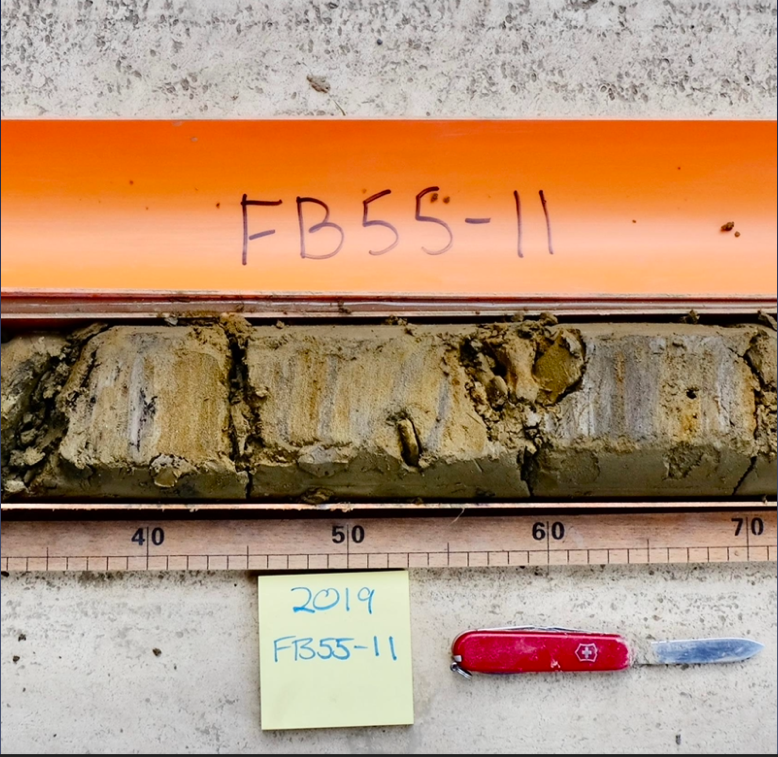
As part of an interactive exercise, Brock then presented three images (collected and analysed by herself) of sediment core samples from the central river valley of Rome, specifically from the area of the Forum Boarium. Participants were asked to describe what they observed:
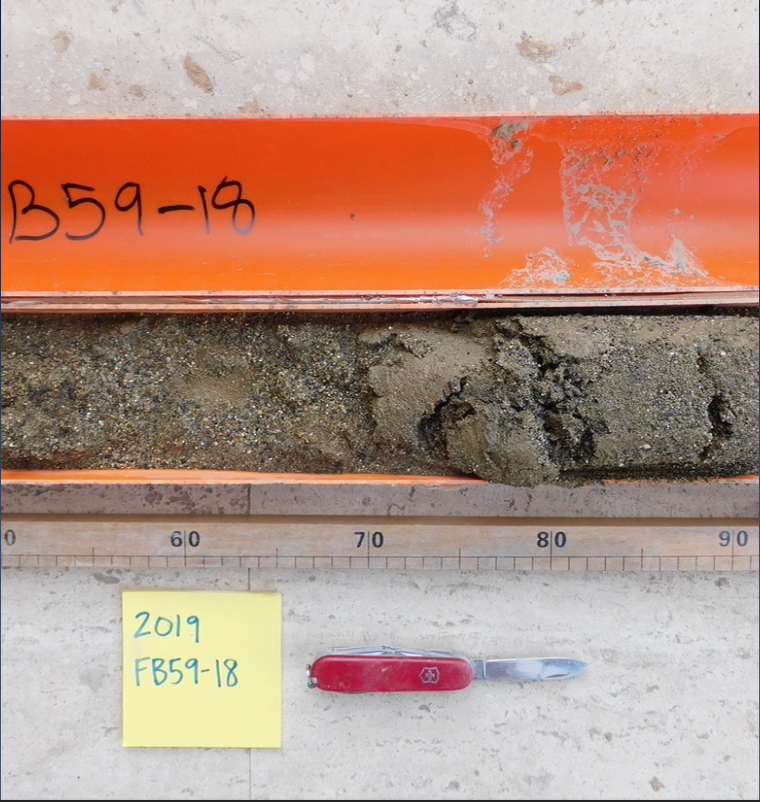

- In Image A, a higher concentration of grains is observable, which is classified as sand. This material was broken down through long-distance transport in a river system. Rivers operate on very strict laws of nature: they transport sands and gravels along their bed (bedload), while finer sediments are carried in suspension within the water. The sand observed here would typically be found on a riverbed, indicating deposition very close to, or within, the river channel itself.
- In Image B, a greyish-yellow clay is visible, characterised by finer grain size and variation in colour. This represents sediments carried in suspension by the river. The alternating grey and yellow striations correspond to repeated flood events. When a river overflows its banks during flooding, its velocity decreases, causing suspended sediments to settle on the floodplain. These layers therefore represent successive flood deposits of silt. This also helps to explain why the Tiber was historically referred to as flauus (‘yellow’), due to the colours of the sediments it carried and deposited across its floodplain.
- Finally, Image C shows an anthropic deposit. The presence of colourful inclusions indicates fragments of ceramic material and mortar, providing clear evidence of human activity.
Brock then discussed the broader implications of her research on sediment cores extracted from the alluvial record of the Tiber riverbank. This type of coring survey allows us to challenge long-standing assumptions about the landscape of Rome in the Bronze and Early Iron Age. Both ancient sources and modern scholars have often imagined the area around the Capitoline hill as a swampy environment. However, coring evidence has significantly revised this interpretation. While swampy, clay-rich sediments have been identified, radiocarbon dating places these in the Neolithic period (about 6000 years ago), long before people have begun to settle on Rome’s hills. Thus, although the area was once swampy, it was not so at the time of early settlement in the Bronze Age. Instead, evidence suggests that the riverbed was much wider during this period, accompanied by an adjacent floodplain. Far from being a swamp, the landscape is now understood as a river valley, characterised by a broad channel and a floodplain subject to periodic flooding.
Such analysis is only possible through collaborative, multidisciplinary work involving palaeobotanical specialists, geologists, geomorphologists, and archaeologists. Once sediment cores are extracted from the ground (through highly specialised machinery often digging at great depths), they undergo detailed stratigraphic description, alongside other analyses including floatation, radiocarbon dating, and the study of ceramic assemblages, often at the microscopic level. Material culture found within the core is particularly valuable as it provides visible evidence for the onset of human activity within the landscape.
After Brock’s presentation, and before the subsequent section on Ecocriticism, there followed a brief discussion of Kyle Harper’s (2017) The Fate of Rome: Climate, Disease, and the End of an Empire. The book highlights the role of environmental factors and pandemics in shaping the development of the ancient Roman civilization, from the third century BCE to the outbreak of the bubonic plague and the little Ice Age in sixth century CE. It represents one of the first major attempts to integrate textual, historiographical, archaeological, and scientific evidence. The book has overall been viewed in the discussion as highlighting the challenges inherent in synthesising such diverse forms of evidence. It underscores the importance of collaboration, as it is difficult for a single scholar to possess equal expertise in literary analysis, archaeological methodology, and large-scale historical interpretation, particularly when dealing with a period as extensive as the one under analysis in this book. As such, it serves as a good example of the necessity of collaboration and multidisciplinary research.
Ecocriticism and Post-Colonial Approaches to Ancient Environmental Studies
Jason König’s presentation explored the challenges and role of using literary texts to examine human-nature relationships in the ancient world, as well as their relevance to the modern world. König emphasised the importance of finding common ground across disciplinary boundaries, noting that literary scholars may be interested in questions that are less relevant to archaeologists and palaeoscientific researchers, including what kinds of reading experience a text offers, how it may have been experienced by its original audience, why it was created, and what purpose it serves. König suggested three ways in which the analysis of ancient literary texts might be useful to foster dialogue between different disciplinary interests. The first considers how new ecocritical perspectives can help us tell different stories about the past, its texts, and the histories of earlier societies. The second asks what use the ancient world has for us in the present. The third engages with postcolonial approaches to environmental studies, asking how literary and archaeological evidence can be used to access the experiences of marginalised groups and communities in the premodern world.
In recent decades, there has been a growing interest in approaching Classical Greek and Roman literature from ecocritical perspectives. A recurring tendency has been to analyse the representation of landscape and the environment in ancient texts in relatively conventional ways, focusing on themes that were already prominent in ancient literature. Nonetheless, this approach can feel disconnected from contemporary problems and crises, and it does not necessarily emphasise the relevance of reading these texts today. As a case study for reflecting on the possibilities and challenges of analysing ancient texts in ways that may be useful for contemporary concerns, König then asked participants to read Edith Hall’s (2025) Epic of the Earth and share their thoughts on its argument. Hall strongly emphasises the relevance of her reading of the Iliad: ‘The Iliad can help us fight back against the current dire new stage in the history of (in)humanity. A green reading will show that the seeds of environmental catastrophe were already sown by warfare millennia ago’ (p.8). In that sense, the book help us confront the question of how to deal with the problem of anachronism – a central issue for anyone working on ancient texts from an ecological perspective. For example, Hall focuses on the representation of human manipulation and destruction of the environment in the Iliad. On possible response would be to reassert the importance of other elements of the text – for instance the way in which the battle-scene similes, where the narrative is briefly interrupted and compared to imagery drawn from the natural world (for instance, a hero attacking his enemies may be likened to a predator like a lion or a wolf, or a warrior’s death to a falling tree) – sometimes represent the human world as fragile and precarious. But that should not be incompatible with using elements of the ancient text opportunistically for our own contemporary priorities, which might even in some cases involve a degree of deliberate anachronism.
Hall’s book may be seen as reflecting what could be termed a genealogical approach to the study of ancient texts. This approach involves tracing legacies – whether negative, as in Hall’s analysis, or more positive ones – from antiquity, that continue to shape the present. While Hall focuses on destructive aspects of human-nature relationship, Mark Usher’s work (see, e.g., Plato’s Pigs and Other Ruminations: Ancient Guides to Living with Nature 2020) offers an example of a more positive reading of ancient attitudes towards nature that may suggest more constructive ways to live in the modern world.
Alternatively, or as well as, we can choose to take a comparative approach. This emphasises both the differences and similarities between ancient and modern perspectives, while respecting the alterity of past cultures and societies. On the one hand, it allows ancient texts to speak on their own terms. On the other, it enables us to compare them with contemporary attitudes, potentially challenging and reshaping our assumptions.
The engagement with postcolonial approaches to environmental studies was the focus of the final section of the workshop. The recommended reading for this section was Dan-el Padilla Peralta’s (2020) article ‘Epistemicide: The Roman Case.’ Drawing on the definition of epistemicide coined by the postcolonial theorist Boaventura de Sousa Santos, Padilla Peralta argues that the processes of Roman imperial expansion and colonisation led to the obliteration of epistemic diversity across the ancient Mediterranean. The article draws on both literary and archaeological evidence to trace the loss of knowledge associated with examples of Roman violence including mass enslavement and ecological destruction.
To reflect on how environmental phenomena and the manipulation of resources can disproportionately affect communities, attention was drawn to several passages from ancient literary sources. The first was Strabo Geography 4.6.7 (cf. also 14.6.5). In the wider discussion, the recognition of the interconnectedness of different communities in mountainous environments was pointed out to be a particularly interesting feature of this passage. The passage describes how, before being conquered and stripped of their resources by the Romans, the people of the Salassi controlled an Alpine valley rich with gold. In order to support their mining industry, the Salassi diverted the course of the Durias River, thereby depriving lowland farmers of irrigations. In the wider discussion, the passage was interpreted as illustrating how the exploitation of resources by a more powerful community can have negative consequences for lower-status groups.
Both the disproportionate impact of environmental damage on disadvantaged communities and the interconnectedness of human communities within natural environments also emerge in two passages from Tacitus concerning floods of the city of Rome. In Histories 1.86, Tacitus describes a devastating flood of the Tiber in 69CE, which inundated not only low-lying areas but also those usually considered safe. Although the flood initially affected even those usually more protected from this sort of catastrophic event, its aftermath disproportionately impacted the lower classes: famine broke out among the masses due to lack of employment or provision, while stagnant water weakened the foundations of apartment buildings (insulae) causing them to collapse when the river receded (cf. Aldrete 2007, Floods of the Tiber in Ancient Rome, pp. 214-6). In another passage (Tac. Annals 1.79), Tacitus reports that, following a devastating flood in 15CE, the emperor Tiberius appointed officials to consider whether the rivers and lakes swelling the waters of the Tiber should be diverted. However, embassies from upriver communities in the Tiber valley petitioned the Senate not to proceed, arguing that such measures would ruin and bring destruction to their lands. They also raised religious concerns, noting that that the Tiber was regarded as a deity and that its flow was constitute a sacrilegious act. Despite the risks faced at Rome, the Senate ultimately decided against intervention. The passage, then, reflects an awareness that environmental interventions in one part of a region can have far-reaching consequences for others.
Conclusions
In summary, this workshop outlined key principles and interdisciplinary approaches for the study of human-nature interactions in the ancient world. In the first section, Ruben Post emphasised the importance of privileging multicausal explanations over environmentally deterministic or narrowly anthropocentric models of human-nature relationships, as well as the need for dialogue and collaboration across disciplines to avoid an exclusive focus on literary sources. Andrea Brock’s subsequent presentation demonstrated how archaeological analysis, based on systematic sampling of environmental datasets, can enable scholars to challenge long-held assumptions and reconstruct past landscapes with greater clarity and higher resolution. In turn, as shown by Jason König, ecocritical approaches to ancient Greek and Roman texts can illuminate previously overlooked aspects of ancient cultures and societies, including more positive attitudes towards the environment, and can also help address the disproportionate impact of environmental damage on disadvantaged communities.
The ambition of covering all these different themes together within a three-hour session meant that discussion time was more limited than we would have liked. Overall, however, this workshop provided a valuable opportunity for students across the arts and humanities to engage with new methodologies and to participate in a stimulating conversation, fostering dialogue and encouraging new approaches to research in ancient environmental studies.
Recommended Readings
Section one
Robert Sallares (2009), ‘Environmental History’, in A. Erskine (ed.), A Companion to Ancient History, 164-174.
Catherine Kearns (2017), ‘Mediterranean Archaeology and Environmental Histories in the Spotlight of the Anthropocene’, History Compass 15, 12371.
Walter Scheidel (2018), ‘Introduction’ in Walter Scheidel (ed.), The Science of Roman History: Biology, Climate, and the Future of the Past, 1-10.
Adam Izdebski (2019), ‘Setting the Scene for an Environmental History of Late Antiquity’, in Adam Izdebski and Michael Mulryan (eds), Environment and Society in the Long late antiquity, 6-12.
Section two
John Bintliff (2024), ‘The Mediterranean Valleys Revisited,’ Geoarchaeology 40, 22029.
Giacomo Parrinello and G. Mathias Kondolf (2021), ‘The social life of sediment,’ Water History 13, 1-12.
Kevin Walsh (2013), The Archaeology of Mediterranean Landscapes: Human-Environment Interaction from the Neolithic to the Roman Period, Cambridge.
Emily Holt (2018), Water and Power in Past Societies, SUNY Press.
Matt Edgeworth (2011), Fluid Pasts: Archaeology of Flow, Bristol Classical Press.
Section three
Kyle Harper (2017), The Fate of Rome: Climate, Disease, and the End of an Empire, ch. 6.
Kristina Sessa (2019), ‘The New Environmental Fall of Rome: a Methodological Consideration’, Journal of Late Antiquity 12, 211-55.
Alain Bresson (2020), ‘Fates of Romes’, Journal of Roman Studies 110, 233-46.
Section four
Dipesh Chakrabarty (2021), The Climate of History in a Planetary Age, Chicago: University of Chicago Press.
Timothy Clark (2015), Ecocriticism on the Edge: The Anthropocene as a Threshold Concept, London: Bloomsbury.
Timothy Clark (2019), The Value of Ecocriticism, Cambridge: Cambridge University Press.
Greg Garrard (2012), Ecocriticism, London: Routledge (2nd edition).
Greg Garrard (ed) (2014) The Oxford Handbook of Ecocriticism, Oxford: Oxford University Press.
Amitav Ghosh (2016), The Great Derangement: Climate Change and the Unthinkable, Chicago: University of Chicago Press.
Ursula Heise (2008), Sense of Place, Sense of Planet: The Environmental Imagination of the Global, Oxford: Oxford University Press.
Clars Bosak-Schroeder, C. (2020) Other Natures: Environmental Encounters with Ancient Greek Ethnography, Oakland CA: University of California Press.
Esther Eidinow and Christopher Schliephake (eds.) (2024), Conversing with Chaos in Graeco-Roman Antiquity: Writing and Reading Environmental Disorder in Ancient Texts, London: Routledge.
Edith Hall (2025), Epic of the Earth: Reading Homer’s Iliad in the Fight for a Dying World, New Haven: Yale University Press.
Christopher Schliephake, (2020) The Environmental Humanities and the Ancient World, Cambridge: Cambridge University Press.
Joel Alden Schlosser (2021), Herodotus in the Anthropocene, Chicago: University of Chicago Press.
Mark Usher (2020), Plato’s Pigs and Other Ruminations: Ancient Guides to Living with Nature, Cambridge: Cambridge University Press.
Mark Usher (2025), Following Nature’s Lead: Ancient Ways of Living in a Dying World, Princeton: Princeton University Press.
Section Five
Brendan Coolsaet (2021), Environmental Justice: Key Issues, Abingdon: Routledge.
Déborah Danowski and Eduardo Viveiros de Castro (2017), The Ends of the World (tr. Rodrigo Nunes; first published in Portugese in 2014), Cambridge: Polity Press.
Elizabeth M. DeLoughrey (2019), Allegories of the Anthropocene, Durham: Duke University Press.
Elizabeth M. DeLoughrey and George B. Handley (eds.) (2011) Postcolonial Ecologies: Literatures of the Environment, Oxford: Oxford University Press.
Graham Huggan and Helen Tiffin (2010), Postcolonial Ecocriticism: Literature, Animals, Environment, Abingdon: Routledge.
Robb Nixon (2011), Slow Violence and the Environmentalism of the Poor, Cambridge, MA: Harvard University Press.
Dan-el Padilla Peralta (2020), ‘Epistemicide: The Roman Case’, Classica 33.2, 151-86.